Adding OpenWrt support for Xiaomi AX6000

Thanks for testing and sharing! Could you please give a bit more detail about the Wi-Fi speed you're getting?

· What are the actual download/upload speeds (in Mbps) you measure when connected via Wi-Fi 6 (5 GHz) to the router?
· For comparison, what speeds did you get on the stock Xiaomi firmware in similar conditions?

Dear, I don't know about this whole topic, but I and other people have already done some tests.

Today, the only test I can run is an internet speed test, where I have a plan with 550Mbps download and 275Mbps upload and I'm connected to Wi-Fi 6.5GHz.

As we've already discussed in this thread, this will only improve when Qualcommax NSS support is available for the IPq50xx.

1 Like

Guys, one thing has definitely improved with version 5.12.0-rc1:

Now I'm able to set the Width to 160MHz.

This has improved the 5G Wi-Fi speed.

Remember that you need to configure the Flow offloading type as Software Flow offloading.

Captura de tela 2025-12-22 171629

2 Likes

Is NSS hardware acceleration actually enabled and working in the 25.12.0-rc1 build, or is the speed gain just from 160MHz + software offloading?

No, Qualcommax NSS is not available for IPq50xx.

You can follow this thread.

Qualcommax NSS Build - Community Builds, Projects & Packages - OpenWrt Forum

The difference I noticed is that now I can use the Width to 160MHz, which I couldn't before.

2 Likes

Any improvements in version 25.12.0-rc2?

Still issuing a bootloop after flashing sysupgrade on latest release.
I believe I am not only one who have faced this issue.

This time I connected to the UART and got logs during boot.

Seems like there are some differences with NAND between revisions

Regarding OpenWrt installation: the community currently appears to confirm that flashing proceeds without issues on devices whose bottom label displays the address "fuwu.mi.com".
I've attached a photo of my unit—it has exactly that label.
I plan to attempt the flash this weekend.

I've been reviewing the discussion on GitHub: https://github.com/openwrt/openwrt/issues/17988

I'll definitely run speed tests afterward.

photo

1 Like

My Experience Migrating a Xiaomi Mi AIoT AX6000 to OpenWrt

I'd like to share my journey of installing OpenWrt on the Xiaomi Mi AIoT AX6000 router.
The label on my unit shows "fuwu.mi.com", but this doesn't guarantee a smooth flashing process.

Baseline Testing on Stock Firmware

I began by running speed tests on the latest Chinese stock firmware (version 122).
I configured the 5 GHz radio on channel 36 with 160 MHz channel width. The regulatory domain wasn't selectable in the UI—I didn't check it initially and now regret that omission.

Test environment:
Client adapter: MEDIATEK MT7922 802.11ax PCIe (supports 160 MHz channels)

Speed test – distant location (marginal signal) on stock firmware

hflabs@MiWiFi-RA72-srv:~$ iw dev wlp98s0 station dump
Station 64:64:4a:8b:50:15 (on wlp98s0)
authorized: yes
authenticated: yes
associated: yes
preamble: long
WMM/WME: yes
MFP: yes
TDLS peer: no
inactive time: 2310 ms
rx bytes: 3239594205
rx packets: 2167808
tx bytes: 78391764
tx packets: 921400
tx retries: 50909
tx failed: 2
beacon loss: 0
rx drop misc: 1
signal: -64 [-64, 17] dBm
signal avg: -65 [-66, -48] dBm
tx bitrate: 103.2 MBit/s 40MHz HE-MCS 2 HE-NSS 2 HE-GI 0 HE-DCM 0
tx duration: 12984009720 us
rx bitrate: 1152.8 MBit/s 160MHz HE-MCS 5 HE-NSS 2 HE-GI 0 HE-DCM 0
rx duration: 12962388411 us
last ack signal:-64 dBm
avg ack signal: -63 dBm
airtime weight: 256
DTIM period: 1
beacon interval:100
short slot time:yes
connected time: 503 seconds
associated at [boottime]: 31.579s
associated at: 1771606826389 ms
current time: 1771607328756 ms

hflabs@MiWiFi-RA72-srv:~$

hflabs@MiWiFi-RA72-srv:~$ iperf3 -c 192.168.1.13 -t 60
Connecting to host 192.168.1.13, port 5201
[ 5] local 192.168.1.102 port 48782 connected to 192.168.1.13 port 5201

[ ID] Interval Transfer Bitrate Retr
[ 5] 0.00-60.00 sec 2.19 GBytes 313 Mbits/sec 2 sender
[ 5] 0.00-60.06 sec 2.18 GBytes 312 Mbits/sec receiver

iperf Done.

Observation: 160 MHz channel active; sustained throughput ~313 Mbps at range.

Speed test – near router through wooden floor on stock firmware

hflabs@MiWiFi-RA72-srv:~$ iw dev wlp98s0 station dump
Station 64:64:4a:8b:50:15 (on wlp98s0)
authorized: yes
authenticated: yes
associated: yes
preamble: long
WMM/WME: yes
MFP: yes
TDLS peer: no
inactive time: 1 ms
rx bytes: 42710910
rx packets: 625500
tx bytes: 6962238366
tx packets: 4599573
tx retries: 293117
tx failed: 0
beacon loss: 0
rx drop misc: 0
signal: -46 [-48, -50] dBm
signal avg: -46 [-47, -49] dBm
tx bitrate: 1921.5 MBit/s 160MHz HE-MCS 9 HE-NSS 2 HE-GI 0 HE-DCM 0
tx duration: 95507291 us
rx bitrate: 2401.9 MBit/s 160MHz HE-MCS 11 HE-NSS 2 HE-GI 0 HE-DCM 0
rx duration: 3795598 us
last ack signal:-41 dBm
avg ack signal: -41 dBm
airtime weight: 256
DTIM period: 1
beacon interval:100
short slot time:yes
connected time: 246 seconds
associated at [boottime]: 53.034s
associated at: 1771607694832 ms
current time: 1771607939993 ms

hflabs@MiWiFi-RA72-srv:~$ iperf3 -c 192.168.1.13 -t 60
Connecting to host 192.168.1.13, port 5201
[ 5] local 192.168.1.102 port 40718 connected to 192.168.1.13 port 5201
[ ID] Interval Transfer Bitrate Retr
[ 5] 0.00-60.00 sec 10.2 GBytes 1.46 Gbits/sec 0 sender
[ 5] 0.00-60.05 sec 10.2 GBytes 1.46 Gbits/sec receiver

iperf Done.

Observation: 160 MHz channel active; sustained throughput ~1.46 Gbps. The 2.5G port was used for the iperf3 server connection.

Flashing Process

I used xmir-patcher to inject the INITRAMFS image:
openwrt-25.12.0-rc5-qualcommax-ipq50xx-xiaomi_ax6000-initramfs-factory.ubi
After successful boot into initramfs, I performed a sysupgrade via LuCI using:
openwrt-25.12.0-rc5-qualcommax-ipq50xx-xiaomi_ax6000-squashfs-sysupgrade.bin
The system came up cleanly.

Encountered Issues

1. WAN/LAN Port Remapping Limitation
Attempting to reassign a LAN switch port to WAN renders the interface non-functional (no DHCP acquisition). While the 2.5G WAN port can be added to the LAN bridge, this eliminates internet connectivity. I couldn't resolve this—had to retain the 2.5G port for WAN, sacrificing the high-speed link to my home server. Not critical, but inconvenient.

2. Wi-Fi Performance Degradation
Initially replicating the stock config (5 GHz, channel 36, 160 MHz) yielded disappointing results:

Speed test – distant location on OpenWrt 25.12.0-rc5 (ch36, 160MHz)

hflabs@MiWiFi-RA72-srv:~$ iw dev wlp98s0 station dump
Station 64:64:4a:8b:50:15 (on wlp98s0)
authorized: yes
authenticated: yes
associated: yes
preamble: long
WMM/WME: yes
MFP: yes
TDLS peer: no
inactive time: 15 ms
rx bytes: 1480596
rx packets: 22030
tx bytes: 374256472
tx packets: 247235
tx retries: 7501
tx failed: 0
beacon loss: 0
rx drop misc: 2
signal: -72 [-74, -76] dBm
signal avg: -72 [-74, -75] dBm
tx bitrate: 288.2 MBit/s 80MHz HE-MCS 3 HE-NSS 2 HE-GI 0 HE-DCM 0
tx duration: 11715644 us
rx bitrate: 432.3 MBit/s 160MHz HE-MCS 4 HE-NSS 1 HE-GI 0 HE-DCM 0
rx duration: 224238 us
last ack signal:-71 dBm
avg ack signal: -71 dBm
airtime weight: 256
DTIM period: 2
beacon interval:100
short slot time:yes
connected time: 35 seconds
associated at [boottime]: 40227.055s
associated at: 1771647868853 ms
current time: 1771647903384 ms

hflabs@MiWiFi-RA72-srv:~$

hflabs@MiWiFi-RA72-srv:~$ iperf3 -c 192.168.1.13 -t 60
Connecting to host 192.168.1.13, port 5201
[ 5] local 192.168.1.102 port 36882 connected to 192.168.1.13 port 5201


[ ID] Interval Transfer Bitrate Retr
[ 5] 0.00-12.30 sec 345 MBytes 235 Mbits/sec 5 sender

Observation: Throughput capped at ~235 Mbps with instability (dips to ~50 Mbps). Signal degraded by ~7 dBm versus stock.

Root Cause Analysis

Inspecting the radio capabilities revealed regulatory constraints:

root@OpenWrt:~# iw phy phy1 info

root@OpenWrt:~# iw phy phy1 info
Wiphy phy1
wiphy index: 1
max # scan SSIDs: 16
max scan IEs length: 398 bytes
max # sched scan SSIDs: 0
max # match sets: 0
Retry short limit: 7
Retry long limit: 4
Coverage class: 0 (up to 0m)
Device supports AP-side u-APSD.
Available Antennas: TX 0xf RX 0xf
Configured Antennas: TX 0xf RX 0xf
Supported interface modes:

  • managed
  • AP
  • monitor
  • mesh point
    Band 2:
    Capabilities: 0x19e7
    RX LDPC
    HT20/HT40
    Dynamic SM Power Save
    RX HT20 SGI
    RX HT40 SGI
    TX STBC
    RX STBC 1-stream
    Max AMSDU length: 7935 bytes
    DSSS/CCK HT40
    Maximum RX AMPDU length 65535 bytes (exponent: 0x003)
    Minimum RX AMPDU time spacing: No restriction (0x00)
    HT TX/RX MCS rate indexes supported: 0-31
    VHT Capabilities (0x338bf9fa):
    Max MPDU length: 11454
    Supported Channel Width: 160 MHz, 80+80 MHz
    RX LDPC
    short GI (80 MHz)
    short GI (160/80+80 MHz)
    TX STBC
    SU Beamformer
    SU Beamformee
    MU Beamformer
    RX antenna pattern consistency
    TX antenna pattern consistency
    VHT RX MCS set:
    1 streams: MCS 0-9
    2 streams: MCS 0-9
    3 streams: MCS 0-9
    4 streams: MCS 0-9
    5 streams: not supported
    6 streams: not supported
    7 streams: not supported
    8 streams: not supported
    VHT RX highest supported: 0 Mbps
    VHT TX MCS set:
    1 streams: MCS 0-9
    2 streams: MCS 0-9
    3 streams: MCS 0-9
    4 streams: MCS 0-9
    5 streams: not supported
    6 streams: not supported
    7 streams: not supported
    8 streams: not supported
    VHT TX highest supported: 0 Mbps
    VHT extended NSS: supported
    HE Iftypes: managed
    HE MAC Capabilities (0x000b9a181040):
    +HTC HE Supported
    TWT Requester
    Dynamic BA Fragementation Level: 1
    BSR
    Broadcast TWT
    OM Control
    Maximum A-MPDU Length Exponent: 3
    RX Control Frame to MultiBSS
    A-MSDU in A-MPDU
    OM Control UL MU Data Disable RX
    HE PHY Capabilities: (0x1c604c89ffdb839c110c00):
    HE40/HE80/5GHz
    HE160/5GHz
    HE160/HE80+80/5GHz
    LDPC Coding in Payload
    HE SU PPDU with 1x HE-LTF and 0.8us GI
    STBC Tx <= 80MHz
    STBC Rx <= 80MHz
    Full Bandwidth UL MU-MIMO
    DCM Max Constellation: 1
    DCM Max Constellation Rx: 1
    SU Beamformer
    SU Beamformee
    MU Beamformer
    Beamformee STS <= 80MHz: 7
    Beamformee STS > 80MHz: 7
    Sounding Dimensions <= 80MHz: 3
    Sounding Dimensions > 80MHz: 3
    Ng = 16 SU Feedback
    Ng = 16 MU Feedback
    Codebook Size SU Feedback
    Codebook Size MU Feedback
    PPE Threshold Present
    HE SU PPDU & HE PPDU 4x HE-LTF 0.8us GI
    Max NC: 3
    STBC Rx > 80MHz
    HE ER SU PPDU 4x HE-LTF 0.8us GI
    HE ER SU PPDU 1x HE-LTF 0.8us GI
    TX 1024-QAM
    RX 1024-QAM
    HE RX MCS and NSS set <= 80 MHz
    1 streams: MCS 0-11
    2 streams: MCS 0-11
    3 streams: MCS 0-11
    4 streams: MCS 0-11
    5 streams: not supported
    6 streams: not supported
    7 streams: not supported
    8 streams: not supported
    HE TX MCS and NSS set <= 80 MHz
    1 streams: MCS 0-11
    2 streams: MCS 0-11
    3 streams: MCS 0-11
    4 streams: MCS 0-11
    5 streams: not supported
    6 streams: not supported
    7 streams: not supported
    8 streams: not supported
    HE RX MCS and NSS set 160 MHz
    1 streams: MCS 0-11
    2 streams: MCS 0-11
    3 streams: MCS 0-11
    4 streams: MCS 0-11
    5 streams: not supported
    6 streams: not supported
    7 streams: not supported
    8 streams: not supported
    HE TX MCS and NSS set 160 MHz
    1 streams: MCS 0-11
    2 streams: MCS 0-11
    3 streams: MCS 0-11
    4 streams: MCS 0-11
    5 streams: not supported
    6 streams: not supported
    7 streams: not supported
    8 streams: not supported
    HE RX MCS and NSS set 80+80 MHz
    1 streams: MCS 0-11
    2 streams: MCS 0-11
    3 streams: MCS 0-11
    4 streams: MCS 0-11
    5 streams: not supported
    6 streams: not supported
    7 streams: not supported
    8 streams: not supported
    HE TX MCS and NSS set 80+80 MHz
    1 streams: MCS 0-11
    2 streams: MCS 0-11
    3 streams: MCS 0-11
    4 streams: MCS 0-11
    5 streams: not supported
    6 streams: not supported
    7 streams: not supported
    8 streams: not supported
    PPE Threshold 0x7b 0x1c 0xc7 0x71 0x1c 0xc7 0x71 0x1c 0xc7 0x71 0x1c 0xc7 0x71
    HE Iftypes: AP
    HE MAC Capabilities (0x000d9a181040):
    +HTC HE Supported
    TWT Responder
    Dynamic BA Fragementation Level: 1
    BSR
    Broadcast TWT
    OM Control
    Maximum A-MPDU Length Exponent: 3
    RX Control Frame to MultiBSS
    A-MSDU in A-MPDU
    OM Control UL MU Data Disable RX
    HE PHY Capabilities: (0x1c604c88ffdb839c110c00):
    HE40/HE80/5GHz
    HE160/5GHz
    HE160/HE80+80/5GHz
    LDPC Coding in Payload
    HE SU PPDU with 1x HE-LTF and 0.8us GI
    STBC Tx <= 80MHz
    STBC Rx <= 80MHz
    Full Bandwidth UL MU-MIMO
    DCM Max Constellation Rx: 1
    SU Beamformer
    SU Beamformee
    MU Beamformer
    Beamformee STS <= 80MHz: 7
    Beamformee STS > 80MHz: 7
    Sounding Dimensions <= 80MHz: 3
    Sounding Dimensions > 80MHz: 3
    Ng = 16 SU Feedback
    Ng = 16 MU Feedback
    Codebook Size SU Feedback
    Codebook Size MU Feedback
    PPE Threshold Present
    HE SU PPDU & HE PPDU 4x HE-LTF 0.8us GI
    Max NC: 3
    STBC Rx > 80MHz
    HE ER SU PPDU 4x HE-LTF 0.8us GI
    HE ER SU PPDU 1x HE-LTF 0.8us GI
    TX 1024-QAM
    RX 1024-QAM
    HE RX MCS and NSS set <= 80 MHz
    1 streams: MCS 0-11
    2 streams: MCS 0-11
    3 streams: MCS 0-11
    4 streams: MCS 0-11
    5 streams: not supported
    6 streams: not supported
    7 streams: not supported
    8 streams: not supported
    HE TX MCS and NSS set <= 80 MHz
    1 streams: MCS 0-11
    2 streams: MCS 0-11
    3 streams: MCS 0-11
    4 streams: MCS 0-11
    5 streams: not supported
    6 streams: not supported
    7 streams: not supported
    8 streams: not supported
    HE RX MCS and NSS set 160 MHz
    1 streams: MCS 0-11
    2 streams: MCS 0-11
    3 streams: MCS 0-11
    4 streams: MCS 0-11
    5 streams: not supported
    6 streams: not supported
    7 streams: not supported
    8 streams: not supported
    HE TX MCS and NSS set 160 MHz
    1 streams: MCS 0-11
    2 streams: MCS 0-11
    3 streams: MCS 0-11
    4 streams: MCS 0-11
    5 streams: not supported
    6 streams: not supported
    7 streams: not supported
    8 streams: not supported
    HE RX MCS and NSS set 80+80 MHz
    1 streams: MCS 0-11
    2 streams: MCS 0-11
    3 streams: MCS 0-11
    4 streams: MCS 0-11
    5 streams: not supported
    6 streams: not supported
    7 streams: not supported
    8 streams: not supported
    HE TX MCS and NSS set 80+80 MHz
    1 streams: MCS 0-11
    2 streams: MCS 0-11
    3 streams: MCS 0-11
    4 streams: MCS 0-11
    5 streams: not supported
    6 streams: not supported
    7 streams: not supported
    8 streams: not supported
    PPE Threshold 0x7b 0x1c 0xc7 0x71 0x1c 0xc7 0x71 0x1c 0xc7 0x71 0x1c 0xc7 0x71
    HE Iftypes: mesh point
    HE MAC Capabilities (0x00098a081040):
    +HTC HE Supported
    Dynamic BA Fragementation Level: 1
    BSR
    OM Control
    Maximum A-MPDU Length Exponent: 1
    RX Control Frame to MultiBSS
    A-MSDU in A-MPDU
    OM Control UL MU Data Disable RX
    HE PHY Capabilities: (0x1c600c80fd5b811c100000):
    HE40/HE80/5GHz
    HE160/5GHz
    HE160/HE80+80/5GHz
    LDPC Coding in Payload
    HE SU PPDU with 1x HE-LTF and 0.8us GI
    STBC Tx <= 80MHz
    STBC Rx <= 80MHz
    SU Beamformer
    SU Beamformee
    Beamformee STS <= 80MHz: 7
    Beamformee STS > 80MHz: 7
    Sounding Dimensions <= 80MHz: 3
    Sounding Dimensions > 80MHz: 3
    Ng = 16 SU Feedback
    Codebook Size SU Feedback
    PPE Threshold Present
    HE SU PPDU & HE PPDU 4x HE-LTF 0.8us GI
    Max NC: 3
    HE ER SU PPDU 1x HE-LTF 0.8us GI
    HE RX MCS and NSS set <= 80 MHz
    1 streams: MCS 0-11
    2 streams: MCS 0-11
    3 streams: MCS 0-11
    4 streams: MCS 0-11
    5 streams: not supported
    6 streams: not supported
    7 streams: not supported
    8 streams: not supported
    HE TX MCS and NSS set <= 80 MHz
    1 streams: MCS 0-11
    2 streams: MCS 0-11
    3 streams: MCS 0-11
    4 streams: MCS 0-11
    5 streams: not supported
    6 streams: not supported
    7 streams: not supported
    8 streams: not supported
    HE RX MCS and NSS set 160 MHz
    1 streams: MCS 0-11
    2 streams: MCS 0-11
    3 streams: MCS 0-11
    4 streams: MCS 0-11
    5 streams: not supported
    6 streams: not supported
    7 streams: not supported
    8 streams: not supported
    HE TX MCS and NSS set 160 MHz
    1 streams: MCS 0-11
    2 streams: MCS 0-11
    3 streams: MCS 0-11
    4 streams: MCS 0-11
    5 streams: not supported
    6 streams: not supported
    7 streams: not supported
    8 streams: not supported
    HE RX MCS and NSS set 80+80 MHz
    1 streams: MCS 0-11
    2 streams: MCS 0-11
    3 streams: MCS 0-11
    4 streams: MCS 0-11
    5 streams: not supported
    6 streams: not supported
    7 streams: not supported
    8 streams: not supported
    HE TX MCS and NSS set 80+80 MHz
    1 streams: MCS 0-11
    2 streams: MCS 0-11
    3 streams: MCS 0-11
    4 streams: MCS 0-11
    5 streams: not supported
    6 streams: not supported
    7 streams: not supported
    8 streams: not supported
    PPE Threshold 0x7b 0x1c 0xc7 0x71 0x1c 0xc7 0x71 0x1c 0xc7 0x71 0x1c 0xc7 0x71
    Frequencies:
  • 5180.0 MHz [36] (23.0 dBm)
  • 5200.0 MHz [40] (23.0 dBm)
  • 5220.0 MHz [44] (23.0 dBm)
  • 5240.0 MHz [48] (23.0 dBm)
  • 5260.0 MHz [52] (23.0 dBm)
  • 5280.0 MHz [56] (23.0 dBm)
  • 5300.0 MHz [60] (23.0 dBm)
  • 5320.0 MHz [64] (23.0 dBm)
  • 5500.0 MHz [100] (30.0 dBm)
  • 5520.0 MHz [104] (30.0 dBm)
  • 5540.0 MHz [108] (30.0 dBm)
  • 5560.0 MHz [112] (30.0 dBm)
  • 5580.0 MHz [116] (30.0 dBm)
  • 5600.0 MHz [120] (30.0 dBm)
  • 5620.0 MHz [124] (30.0 dBm)
  • 5640.0 MHz [128] (30.0 dBm)
  • 5660.0 MHz [132] (30.0 dBm)
  • 5680.0 MHz [136] (30.0 dBm)
  • 5700.0 MHz [140] (30.0 dBm)
  • 5720.0 MHz [144] (30.0 dBm)
  • 5745.0 MHz [149] (30.0 dBm)
  • 5765.0 MHz [153] (30.0 dBm)
  • 5785.0 MHz [157] (30.0 dBm)
  • 5805.0 MHz [161] (30.0 dBm)
  • 5825.0 MHz [165] (30.0 dBm)
  • 5845.0 MHz [169] (disabled)
  • 5865.0 MHz [173] (disabled)
  • 5885.0 MHz [177] (disabled)
    valid interface combinations:
  • #{ managed } <= 1, #{ AP, mesh point } <= 16,
    total <= 16, #channels <= 1, STA/AP BI must match, radar detect widths: { 20 MHz (no HT), 20 MHz, 40 MHz, 80 MHz, 80+80 MHz, 160 MHz }

HT Capability overrides:

  • MCS: ff ff ff ff ff ff ff ff ff ff
  • maximum A-MSDU length
  • supported channel width
  • short GI for 40 MHz
  • max A-MPDU length exponent
  • min MPDU start spacing
    max # scan plans: 1
    max scan plan interval: -1
    max scan plan iterations: 0
    Maximum associated stations in AP mode: 128
    Supported extended features:
  • [ SET_SCAN_DWELL ]: scan dwell setting
  • [ FILS_STA ]: STA FILS (Fast Initial Link Setup)
  • [ CQM_RSSI_LIST ]: multiple CQM_RSSI_THOLD records
  • [ CONTROL_PORT_OVER_NL80211 ]: control port over nl80211
  • [ ACK_SIGNAL_SUPPORT ]: ack signal level support
  • [ TXQS ]: FQ-CoDel-enabled intermediate TXQs
  • [ ENABLE_FTM_RESPONDER ]: enable FTM (Fine Time Measurement) responder
  • [ STA_TX_PWR ]: TX power control per station
  • [ CONTROL_PORT_NO_PREAUTH ]: disable pre-auth over nl80211 control port support
  • [ SCAN_FREQ_KHZ ]: scan on kHz frequency support
  • [ CONTROL_PORT_OVER_NL80211_TX_STATUS ]: tx status for nl80211 control port support
  • [ BSS_COLOR ]: BSS coloring support
  • [ POWERED_ADDR_CHANGE ]: can change MAC address while up
    root@OpenWrt:~#

In Russia (RU regulatory domain):

  • Channels 36–64: 160 MHz capable but capped at 23 dBm transmit power
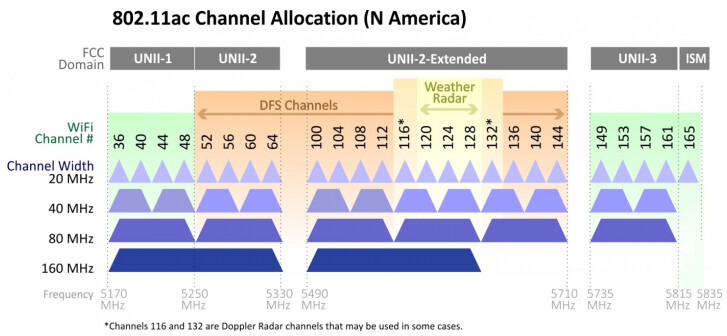
  • Channels 100–144: 30 dBm allowed but 160 MHz unavailable due to DFS requirements and spectrum fragmentation

Stock firmware likely bypasses regulatory limits or uses non-compliant power tables. Even setting regulatory domain to CN (China) didn't help—channels 100+ were disabled, and 36–64 remained at 23 dBm. Setting 00 (world) prevented the radio from initializing entirely.

Optimized Configuration

I abandoned 160 MHz and switched to:

  • Channel 132 (5660 MHz)
  • 80 MHz width
  • 30 dBm transmit power (allowed under RU domain)
Speed test – distant location (ch132, 80MHz, 30dBm

hflabs@MiWiFi-RA72-srv:~$ iw dev wlp98s0 station dump
Station 64:64:4a:8b:50:15 (on wlp98s0)
authorized: yes
authenticated: yes
associated: yes
preamble: long
WMM/WME: yes
MFP: yes
TDLS peer: no
inactive time: 1 ms
rx bytes: 1224424
rx packets: 17850
tx bytes: 459828421
tx packets: 303927
tx retries: 27646
tx failed: 0
beacon loss: 0
rx drop misc: 0
signal: -65 [-68, -68] dBm
signal avg: -65 [-68, -68] dBm
tx bitrate: 288.2 MBit/s 80MHz HE-MCS 3 HE-NSS 2 HE-GI 0 HE-DCM 0
tx duration: 16185827 us
rx bitrate: 432.3 MBit/s 80MHz HE-MCS 4 HE-NSS 2 HE-GI 0 HE-DCM 0
rx duration: 394472 us
last ack signal:-64 dBm
avg ack signal: -63 dBm
airtime weight: 256
DTIM period: 2
beacon interval:100
short slot time:yes
connected time: 41 seconds
associated at [boottime]: 41839.342s
associated at: 1771649481140 ms
current time: 1771649521595 ms

hflabs@MiWiFi-RA72-srv:~$

hflabs@MiWiFi-RA72-srv:~$ iperf3 -c 192.168.1.13 -t 60
Connecting to host 192.168.1.13, port 5201
[ 5] local 192.168.1.102 port 59264 connected to 192.168.1.13 port 5201


[ ID] Interval Transfer Bitrate Retr
[ 5] 0.00-60.00 sec 1.30 GBytes 187 Mbits/sec 85 sender
[ 5] 0.00-60.05 sec 1.30 GBytes 186 Mbits/sec receiver

iperf Done.
hflabs@MiWiFi-RA72-srv:~$

Observation: Slightly lower throughput (~187 Mbps) but stable—no fluctuations. Signal quality identical to stock.

Speed test – near router through floor (ch132, 80MHz, 30dBm)

hflabs@MiWiFi-RA72-srv:~$ iw dev wlp98s0 station dump
Station 64:64:4a:8b:50:15 (on wlp98s0)
authorized: yes
authenticated: yes
associated: yes
preamble: long
WMM/WME: yes
MFP: yes
TDLS peer: no
inactive time: 0 ms
rx bytes: 5580285
rx packets: 82730
tx bytes: 1637379529
tx packets: 1081856
tx retries: 83184
tx failed: 0
beacon loss: 0
rx drop misc: 2
signal: -44 [-49, -45] dBm
signal avg: -44 [-48, -45] dBm
tx bitrate: 1080.6 MBit/s 80MHz HE-MCS 10 HE-NSS 2 HE-GI 0 HE-DCM 0
tx duration: 59969506 us
rx bitrate: 1200.9 MBit/s 80MHz HE-MCS 11 HE-NSS 2 HE-GI 0 HE-DCM 0
rx duration: 1291500 us
last ack signal:-40 dBm
avg ack signal: -40 dBm
airtime weight: 256
DTIM period: 2
beacon interval:100
short slot time:yes
connected time: 220 seconds
associated at [boottime]: 42299.788s
associated at: 1771649941586 ms
current time: 1771650161440 ms

hflabs@MiWiFi-RA72-srv:~$

hflabs@MiWiFi-RA72-srv:~$ iperf3 -c 192.168.1.13 -t 60
Connecting to host 192.168.1.13, port 5201
[ 5] local 192.168.1.102 port 58372 connected to 192.168.1.13 port 5201


[ ID] Interval Transfer Bitrate Retr
[ 5] 0.00-60.00 sec 4.04 GBytes 579 Mbits/sec 81 sender
[ 5] 0.00-60.07 sec 4.04 GBytes 578 Mbits/sec receiver

iperf Done.
hflabs@MiWiFi-RA72-srv:~$

Observation: ~579 Mbps throughput—about half of stock's 1.46 Gbps—but completely stable with identical signal metrics.

Conclusions

  1. Stability > Peak Speed: The 80 MHz @ 30 dBm configuration provides reliable performance despite lower theoretical throughput. Regulatory-compliant power limits on 160 MHz channels (23 dBm) significantly impact real-world range and stability.
  2. Stock Firmware Behavior: Xiaomi's firmware likely ignores regulatory transmit power limits or uses region-specific calibration data not exposed in OpenWrt's ath11k driver stack. Even with CN domain set, OpenWrt enforces proper limits.
  3. Wired Performance: No degradation observed on Ethernet interfaces—wire-speed routing/NAT maintained.
  4. Configuration Effort: Achieving optimal Wi-Fi performance on OpenWrt requires deeper understanding of regulatory domains, channel planning, and power constraints compared to stock firmware's "black box" approach.

While OpenWrt sacrifices some peak throughput on this device under RU regulations, it delivers transparency, stability, and full control—worth the tuning effort for enthusiasts. Further driver/firmware improvements may close the performance gap in future releases.

4 Likes

For the record, my version is CCC.

After updating to 25.12.0 - Stable Release, I can't activate the 160MHz bandwidth.

1 Like

what the command output shows?:
iw phy phy1 info

I am currently using version: OpenWrt SNAPSHOT, r33336-898f678261

root@OpenWrt:~# iw phy phy1 info
Wiphy phy1
wiphy index: 1
max # scan SSIDs: 16
max scan IEs length: 398 bytes
max # sched scan SSIDs: 0
max # match sets: 0
Retry short limit: 7
Retry long limit: 4
Coverage class: 0 (up to 0m)
Device supports AP-side u-APSD.
Available Antennas: TX 0xf RX 0xf
Configured Antennas: TX 0xf RX 0xf
Supported interface modes:
* managed
* AP
* monitor
* mesh point
Band 2:
Capabilities: 0x19e7
RX LDPC
HT20/HT40
Dynamic SM Power Save
RX HT20 SGI
RX HT40 SGI
TX STBC
RX STBC 1-stream
Max AMSDU length: 7935 bytes
DSSS/CCK HT40
Maximum RX AMPDU length 65535 bytes (exponent: 0x003)
Minimum RX AMPDU time spacing: No restriction (0x00)
HT TX/RX MCS rate indexes supported: 0-31
VHT Capabilities (0x338bf9fa):
Max MPDU length: 11454
Supported Channel Width: 160 MHz, 80+80 MHz
RX LDPC
short GI (80 MHz)
short GI (160/80+80 MHz)
TX STBC
SU Beamformer
SU Beamformee
MU Beamformer
RX antenna pattern consistency
TX antenna pattern consistency
VHT RX MCS set:
1 streams: MCS 0-9
2 streams: MCS 0-9
3 streams: MCS 0-9
4 streams: MCS 0-9
5 streams: not supported
6 streams: not supported
7 streams: not supported
8 streams: not supported
VHT RX highest supported: 0 Mbps
VHT TX MCS set:
1 streams: MCS 0-9
2 streams: MCS 0-9
3 streams: MCS 0-9
4 streams: MCS 0-9
5 streams: not supported
6 streams: not supported
7 streams: not supported
8 streams: not supported
VHT TX highest supported: 0 Mbps
VHT extended NSS: supported
HE Iftypes: managed
HE MAC Capabilities (0x000b9a181040):
+HTC HE Supported
TWT Requester
Dynamic BA Fragementation Level: 1
BSR
Broadcast TWT
OM Control
Maximum A-MPDU Length Exponent: 3
RX Control Frame to MultiBSS
A-MSDU in A-MPDU
OM Control UL MU Data Disable RX
HE PHY Capabilities: (0x1c604c89ffdb839c110c00):
HE40/HE80/5GHz
HE160/5GHz
HE160/HE80+80/5GHz
LDPC Coding in Payload
HE SU PPDU with 1x HE-LTF and 0.8us GI
STBC Tx <= 80MHz
STBC Rx <= 80MHz
Full Bandwidth UL MU-MIMO
DCM Max Constellation: 1
DCM Max Constellation Rx: 1
SU Beamformer
SU Beamformee
MU Beamformer
Beamformee STS <= 80MHz: 7
Beamformee STS > 80MHz: 7
Sounding Dimensions <= 80MHz: 3
Sounding Dimensions > 80MHz: 3
Ng = 16 SU Feedback
Ng = 16 MU Feedback
Codebook Size SU Feedback
Codebook Size MU Feedback
PPE Threshold Present
HE SU PPDU & HE PPDU 4x HE-LTF 0.8us GI
Max NC: 3
STBC Rx > 80MHz
HE ER SU PPDU 4x HE-LTF 0.8us GI
HE ER SU PPDU 1x HE-LTF 0.8us GI
TX 1024-QAM
RX 1024-QAM
HE RX MCS and NSS set <= 80 MHz
1 streams: MCS 0-11
2 streams: MCS 0-11
3 streams: MCS 0-11
4 streams: MCS 0-11
5 streams: not supported
6 streams: not supported
7 streams: not supported
8 streams: not supported
HE TX MCS and NSS set <= 80 MHz
1 streams: MCS 0-11
2 streams: MCS 0-11
3 streams: MCS 0-11
4 streams: MCS 0-11
5 streams: not supported
6 streams: not supported
7 streams: not supported
8 streams: not supported
HE RX MCS and NSS set 160 MHz
1 streams: MCS 0-11
2 streams: MCS 0-11
3 streams: MCS 0-11
4 streams: MCS 0-11
5 streams: not supported
6 streams: not supported
7 streams: not supported
8 streams: not supported
HE TX MCS and NSS set 160 MHz
1 streams: MCS 0-11
2 streams: MCS 0-11
3 streams: MCS 0-11
4 streams: MCS 0-11
5 streams: not supported
6 streams: not supported
7 streams: not supported
8 streams: not supported
HE RX MCS and NSS set 80+80 MHz
1 streams: MCS 0-11
2 streams: MCS 0-11
3 streams: MCS 0-11
4 streams: MCS 0-11
5 streams: not supported
6 streams: not supported
7 streams: not supported
8 streams: not supported
HE TX MCS and NSS set 80+80 MHz
1 streams: MCS 0-11
2 streams: MCS 0-11
3 streams: MCS 0-11
4 streams: MCS 0-11
5 streams: not supported
6 streams: not supported
7 streams: not supported
8 streams: not supported
PPE Threshold 0x7b 0x1c 0xc7 0x71 0x1c 0xc7 0x71 0x1c 0xc7 0x71 0x1c 0xc7 0x71
HE Iftypes: AP
HE MAC Capabilities (0x000d9a181040):
+HTC HE Supported
TWT Responder
Dynamic BA Fragementation Level: 1
BSR
Broadcast TWT
OM Control
Maximum A-MPDU Length Exponent: 3
RX Control Frame to MultiBSS
A-MSDU in A-MPDU
OM Control UL MU Data Disable RX
HE PHY Capabilities: (0x1c604c88ffdb839c110c00):
HE40/HE80/5GHz
HE160/5GHz
HE160/HE80+80/5GHz
LDPC Coding in Payload
HE SU PPDU with 1x HE-LTF and 0.8us GI
STBC Tx <= 80MHz
STBC Rx <= 80MHz
Full Bandwidth UL MU-MIMO
DCM Max Constellation Rx: 1
SU Beamformer
SU Beamformee
MU Beamformer
Beamformee STS <= 80MHz: 7
Beamformee STS > 80MHz: 7
Sounding Dimensions <= 80MHz: 3
Sounding Dimensions > 80MHz: 3
Ng = 16 SU Feedback
Ng = 16 MU Feedback
Codebook Size SU Feedback
Codebook Size MU Feedback
PPE Threshold Present
HE SU PPDU & HE PPDU 4x HE-LTF 0.8us GI
Max NC: 3
STBC Rx > 80MHz
HE ER SU PPDU 4x HE-LTF 0.8us GI
HE ER SU PPDU 1x HE-LTF 0.8us GI
TX 1024-QAM
RX 1024-QAM
HE RX MCS and NSS set <= 80 MHz
1 streams: MCS 0-11
2 streams: MCS 0-11
3 streams: MCS 0-11
4 streams: MCS 0-11
5 streams: not supported
6 streams: not supported
7 streams: not supported
8 streams: not supported
HE TX MCS and NSS set <= 80 MHz
1 streams: MCS 0-11
2 streams: MCS 0-11
3 streams: MCS 0-11
4 streams: MCS 0-11
5 streams: not supported
6 streams: not supported
7 streams: not supported
8 streams: not supported
HE RX MCS and NSS set 160 MHz
1 streams: MCS 0-11
2 streams: MCS 0-11
3 streams: MCS 0-11
4 streams: MCS 0-11
5 streams: not supported
6 streams: not supported
7 streams: not supported
8 streams: not supported
HE TX MCS and NSS set 160 MHz
1 streams: MCS 0-11
2 streams: MCS 0-11
3 streams: MCS 0-11
4 streams: MCS 0-11
5 streams: not supported
6 streams: not supported
7 streams: not supported
8 streams: not supported
HE RX MCS and NSS set 80+80 MHz
1 streams: MCS 0-11
2 streams: MCS 0-11
3 streams: MCS 0-11
4 streams: MCS 0-11
5 streams: not supported
6 streams: not supported
7 streams: not supported
8 streams: not supported
HE TX MCS and NSS set 80+80 MHz
1 streams: MCS 0-11
2 streams: MCS 0-11
3 streams: MCS 0-11
4 streams: MCS 0-11
5 streams: not supported
6 streams: not supported
7 streams: not supported
8 streams: not supported
PPE Threshold 0x7b 0x1c 0xc7 0x71 0x1c 0xc7 0x71 0x1c 0xc7 0x71 0x1c 0xc7 0x71
HE Iftypes: mesh point
HE MAC Capabilities (0x00098a081040):
+HTC HE Supported
Dynamic BA Fragementation Level: 1
BSR
OM Control
Maximum A-MPDU Length Exponent: 1
RX Control Frame to MultiBSS
A-MSDU in A-MPDU
OM Control UL MU Data Disable RX
HE PHY Capabilities: (0x1c600c80fd5b811c100000):
HE40/HE80/5GHz
HE160/5GHz
HE160/HE80+80/5GHz
LDPC Coding in Payload
HE SU PPDU with 1x HE-LTF and 0.8us GI
STBC Tx <= 80MHz
STBC Rx <= 80MHz
SU Beamformer
SU Beamformee
Beamformee STS <= 80MHz: 7
Beamformee STS > 80MHz: 7
Sounding Dimensions <= 80MHz: 3
Sounding Dimensions > 80MHz: 3
Ng = 16 SU Feedback
Codebook Size SU Feedback
PPE Threshold Present
HE SU PPDU & HE PPDU 4x HE-LTF 0.8us GI
Max NC: 3
HE ER SU PPDU 1x HE-LTF 0.8us GI
HE RX MCS and NSS set <= 80 MHz
1 streams: MCS 0-11
2 streams: MCS 0-11
3 streams: MCS 0-11
4 streams: MCS 0-11
5 streams: not supported
6 streams: not supported
7 streams: not supported
8 streams: not supported
HE TX MCS and NSS set <= 80 MHz
1 streams: MCS 0-11
2 streams: MCS 0-11
3 streams: MCS 0-11
4 streams: MCS 0-11
5 streams: not supported
6 streams: not supported
7 streams: not supported
8 streams: not supported
HE RX MCS and NSS set 160 MHz
1 streams: MCS 0-11
2 streams: MCS 0-11
3 streams: MCS 0-11
4 streams: MCS 0-11
5 streams: not supported
6 streams: not supported
7 streams: not supported
8 streams: not supported
HE TX MCS and NSS set 160 MHz
1 streams: MCS 0-11
2 streams: MCS 0-11
3 streams: MCS 0-11
4 streams: MCS 0-11
5 streams: not supported
6 streams: not supported
7 streams: not supported
8 streams: not supported
HE RX MCS and NSS set 80+80 MHz
1 streams: MCS 0-11
2 streams: MCS 0-11
3 streams: MCS 0-11
4 streams: MCS 0-11
5 streams: not supported
6 streams: not supported
7 streams: not supported
8 streams: not supported
HE TX MCS and NSS set 80+80 MHz
1 streams: MCS 0-11
2 streams: MCS 0-11
3 streams: MCS 0-11
4 streams: MCS 0-11
5 streams: not supported
6 streams: not supported
7 streams: not supported
8 streams: not supported
PPE Threshold 0x7b 0x1c 0xc7 0x71 0x1c 0xc7 0x71 0x1c 0xc7 0x71 0x1c 0xc7 0x71
Frequencies:
* 5180.0 MHz [36] (30.0 dBm)
* 5200.0 MHz [40] (30.0 dBm)
* 5220.0 MHz [44] (30.0 dBm)
* 5240.0 MHz [48] (30.0 dBm)
* 5260.0 MHz [52] (24.0 dBm) (radar detection)
* 5280.0 MHz [56] (24.0 dBm) (radar detection)
* 5300.0 MHz [60] (24.0 dBm) (radar detection)
* 5320.0 MHz [64] (24.0 dBm) (radar detection)
* 5500.0 MHz [100] (24.0 dBm) (radar detection)
* 5520.0 MHz [104] (24.0 dBm) (radar detection)
* 5540.0 MHz [108] (24.0 dBm) (radar detection)
* 5560.0 MHz [112] (24.0 dBm) (radar detection)
* 5580.0 MHz [116] (24.0 dBm) (radar detection)
* 5600.0 MHz [120] (24.0 dBm) (radar detection)
* 5620.0 MHz [124] (24.0 dBm) (radar detection)
* 5640.0 MHz [128] (24.0 dBm) (radar detection)
* 5660.0 MHz [132] (24.0 dBm) (radar detection)
* 5680.0 MHz [136] (24.0 dBm) (radar detection)
* 5700.0 MHz [140] (24.0 dBm) (radar detection)
* 5720.0 MHz [144] (24.0 dBm) (radar detection)
* 5745.0 MHz [149] (30.0 dBm)
* 5765.0 MHz [153] (30.0 dBm)
* 5785.0 MHz [157] (30.0 dBm)
* 5805.0 MHz [161] (30.0 dBm)
* 5825.0 MHz [165] (30.0 dBm)
* 5845.0 MHz [169] (30.0 dBm)
* 5865.0 MHz [173] (30.0 dBm)
* 5885.0 MHz [177] (30.0 dBm)
valid interface combinations:
* #{ managed } <= 1, #{ AP, mesh point } <= 16,
total <= 16, #channels <= 1, STA/AP BI must match, radar detect widths: { 20 MHz (no HT), 20 MHz, 40 MHz, 80 MHz, 80+80 MHz, 160 MHz }

    HT Capability overrides:
             * MCS: ff ff ff ff ff ff ff ff ff ff
             * maximum A-MSDU length
             * supported channel width
             * short GI for 40 MHz
             * max A-MPDU length exponent
             * min MPDU start spacing
    max # scan plans: 1
    max scan plan interval: -1
    max scan plan iterations: 0
    Maximum associated stations in AP mode: 128
    Supported extended features:
            * [ RRM ]: RRM
            * [ SET_SCAN_DWELL ]: scan dwell setting
            * [ FILS_STA ]: STA FILS (Fast Initial Link Setup)
            * [ CQM_RSSI_LIST ]: multiple CQM_RSSI_THOLD records
            * [ CONTROL_PORT_OVER_NL80211 ]: control port over nl80211
            * [ ACK_SIGNAL_SUPPORT ]: ack signal level support
            * [ TXQS ]: FQ-CoDel-enabled intermediate TXQs
            * [ ENABLE_FTM_RESPONDER ]: enable FTM (Fine Time Measurement) responder
            * [ STA_TX_PWR ]: TX power control per station
            * [ CONTROL_PORT_NO_PREAUTH ]: disable pre-auth over nl80211 control port support
            * [ SCAN_FREQ_KHZ ]: scan on kHz frequency support
            * [ CONTROL_PORT_OVER_NL80211_TX_STATUS ]: tx status for nl80211 control port support
            * [ BSS_COLOR ]: BSS coloring support
            * [ POWERED_ADDR_CHANGE ]: can change MAC address while up

Although your hardware supports 160 MHz, there are several conditions for successful operation:

1. DFS (Dynamic Frequency Selection) and radar detection
Almost all channels suitable for 160 MHz operation (channels 52–64 and 100–128) are marked in your iw phy output as (radar detection) .

  • What this means: Before bringing up the AP interface, the router is required to perform a 60-second CAC (Channel Availability Check), listening to the channel for radar signals (e.g., weather stations, military systems).
  • Practical implications:
    • Your Wi-Fi network will not appear immediately after a reboot—you need to wait ~60 seconds for CAC to complete.
    • If the router detects a radar signal during normal operation, it is legally required to immediately stop transmitting on that channel and switch to a different one (which may cause temporary client disconnections).

Note: This behavior is mandated by regulatory domains (FCC, ETSI, etc.) and cannot be disabled without violating radio regulations.

1 Like

I always use channels 36 or 44 here.

When I installed version 25.12.0 - Stable Release, I tried to activate the 160MHz bandwidth, but it only worked at 80MHz.

Currently, I'm using the OpenWrt SNAPSHOT version, r33336-898f678261, and it's working at 160MHz.

The problem is most likely in the installed power of the transmitter and the choice of channel.
The snapshot is probably just ignoring the laws.
160mhz width 36 to 64 channels should not be turned on with a power of 30dbm in your country

2 Likes

Thanks.

Can you share your performance results?

Overall performance is very good with 160MHz enabled, but it's still slightly behind the standard firmware, probably due to the lack of NSS.

@AbyssMoon

Look how interesting, the standard firmware accepts up to 33.0 dBm on some channels.

root@XiaoQiang:~#  iw phy phy1 info
Wiphy phy1
        max # scan SSIDs: 10
        max scan IEs length: 255 bytes
        max # sched scan SSIDs: 0
        max # match sets: 0
        max # scan plans: 1
        max scan plan interval: -1
        max scan plan iterations: 0
        Retry short limit: 7
        Retry long limit: 4
        Coverage class: 0 (up to 0m)
        Device supports AP-side u-APSD.
        Available Antennas: TX 0xf RX 0xf
        Configured Antennas: TX 0xf RX 0xf
        Supported interface modes:
                 * managed
                 * AP
                 * AP/VLAN
                 * WDS
                 * monitor
        Band 2:
                Capabilities: 0x19e7
                        RX LDPC
                        HT20/HT40
                        Dynamic SM Power Save
                        RX HT20 SGI
                        RX HT40 SGI
                        TX STBC
                        RX STBC 1-stream
                        Max AMSDU length: 7935 bytes
                        DSSS/CCK HT40
                Maximum RX AMPDU length 65535 bytes (exponent: 0x003)
                Minimum RX AMPDU time spacing: No restriction (0x00)
                HT TX/RX MCS rate indexes supported: 0-31
                VHT Capabilities (0x738b79fa):
                        Max MPDU length: 11454
                        Supported Channel Width: 160 MHz, 80+80 MHz
                        RX LDPC
                        short GI (80 MHz)
                        short GI (160/80+80 MHz)
                        TX STBC
                        SU Beamformer
                        SU Beamformee
                        MU Beamformer
                        RX antenna pattern consistency
                        TX antenna pattern consistency
                VHT RX MCS set:
                        1 streams: MCS 0-9
                        2 streams: MCS 0-9
                        3 streams: MCS 0-9
                        4 streams: MCS 0-9
                        5 streams: not supported
                        6 streams: not supported
                        7 streams: not supported
                        8 streams: not supported
                VHT RX highest supported: 0 Mbps
                VHT TX MCS set:
                        1 streams: MCS 0-9
                        2 streams: MCS 0-9
                        3 streams: MCS 0-9
                        4 streams: MCS 0-9
                        5 streams: not supported
                        6 streams: not supported
                        7 streams: not supported
                        8 streams: not supported
                VHT TX highest supported: 0 Mbps
                Frequencies:
                        * 5180 MHz [36] (30.0 dBm)
                        * 5200 MHz [40] (30.0 dBm)
                        * 5220 MHz [44] (30.0 dBm)
                        * 5240 MHz [48] (30.0 dBm)
                        * 5260 MHz [52] (30.0 dBm)
                        * 5280 MHz [56] (30.0 dBm)
                        * 5300 MHz [60] (30.0 dBm)
                        * 5320 MHz [64] (30.0 dBm)
                        * 5745 MHz [149] (33.0 dBm)
                        * 5765 MHz [153] (33.0 dBm)
                        * 5785 MHz [157] (33.0 dBm)
                        * 5805 MHz [161] (33.0 dBm)
                        * 5825 MHz [165] (33.0 dBm)
        valid interface combinations:
                 * #{ AP } <= 17, #{ managed } <= 30, #{ monitor } <= 1,
                   total <= 17, #channels <= 1, STA/AP BI must match, radar detect widths: { 20 MHz (no HT), 20 MHz, 40 MHz, 80 MHz }
1 Like

Just so you know, I'm using OpenWrt version 25.12.2 and I'm impressed with the stability.

We still have performance issues because we don't yet have NSS support, but for my use it's very good.

NSS isn't really FOSSed, you shouldn't expect it to ever get implemented in the official builds.

1 Like